Andrew Miller is the International Director of DMI. When he’s not snacking on licorice allssorts in Sydney, he’s travelling around the world raising funds and DMI’s profile in developed countries or visiting the fields we support to see what’s needed and how our funds are being managed. Either way, he works tirelessly to avoid unidentifiable food and meets lots of weird and wonderful people who he just can’t resist interviewing…
#27 Ruth
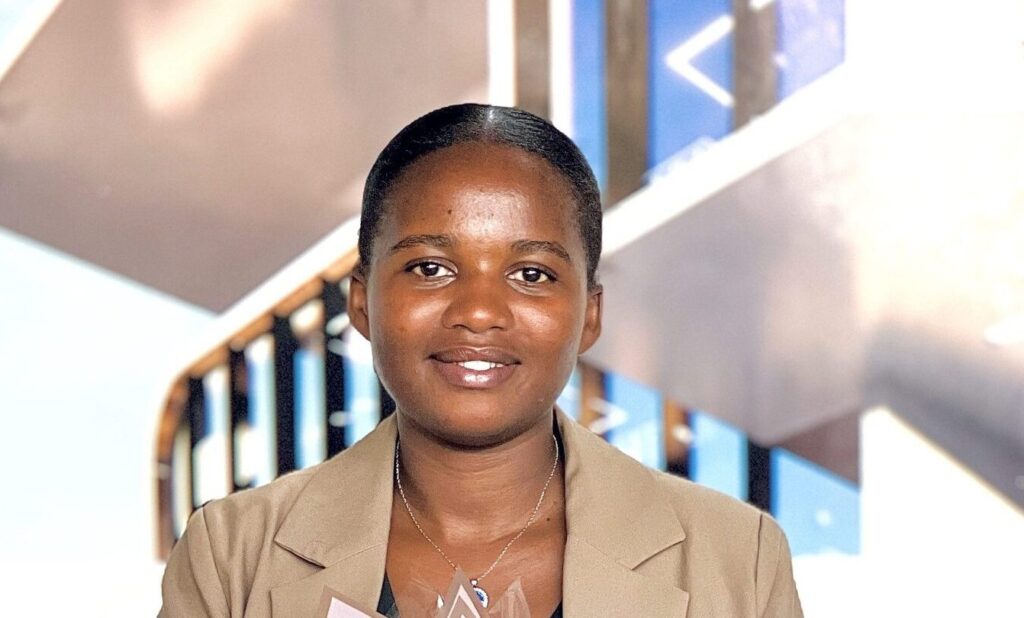
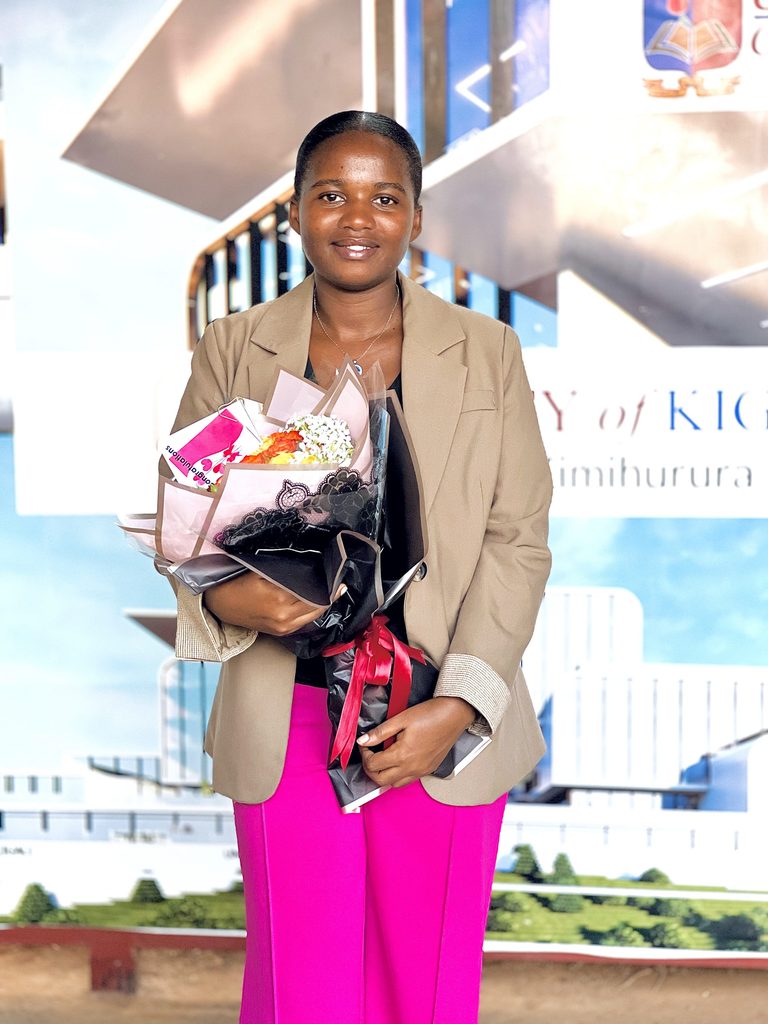
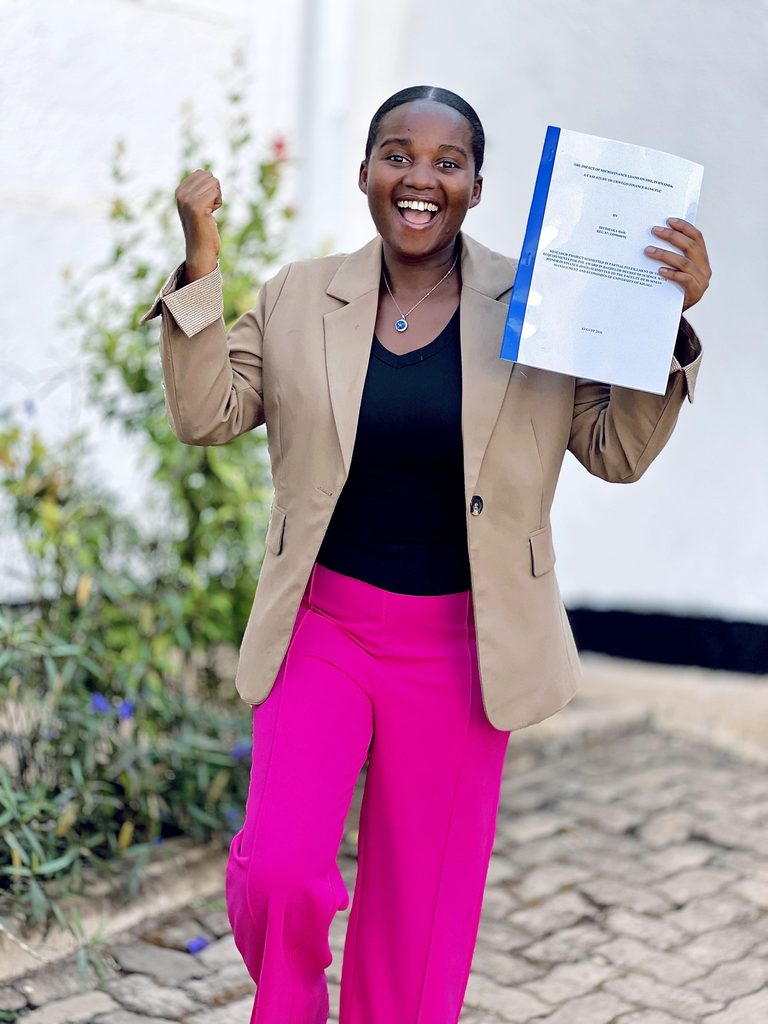
Ruth Ibyishaka (Deaf) is the accountant in arguably the busiest office in DMI’s network: Deaf Action Ministries Rwanda (DAMR). There, she keeps a close eye on the funds coming in and going out, and she has just celebrated a major achievement.
Andrew: When did you start working with DAMR?
Ruth: I started in 2024.
And you work under Patrick. Everyone knows he is a really harsh taskmaster. Is it true he carries a whip around the office?
Haha, no! Not true! I’m so happy working with Patrick. Whenever we face challenges, it’s easy to sit down and work things out together. He’s a really good guy.
Yes, I know, but he’s so sincere that he’s a ripe target for teasing, don’t you think?
Yes, I like to joke around with Patrick, and whenever he gets stressed, I tell him some jokes to help him relax.
That’s very kind of you. Susi never tells me jokes when I get stressed. Tell me, were you born Deaf?
I was born hearing, but I caught meningitis at the age of four and became deaf then.
Do you remember what it was like to be hearing?
I have a few vague memories. I remember some of the songs we used to sing in Sunday school, but not much else.
Ruth, do you like being Deaf, or do you wish you could be hearing again?
I’m quite happy being Deaf. The Bible tells us that we should be content and happy with the way that we are, so I’m quite happy as I am.
Could you please tell me a little bit about your family background – your parents, your siblings and so on?
I’m one of seven children. My father is a pastor, and my mother is a deacon in the church. I’m the fourth-born, but the first and third died. My father always worked hard and tried to get money for me to be educated, and I’m very grateful that I was able to get a good education. One of my sisters is able to sign a little, but not really anyone else in my family.
So how do you feel not being able to communicate with most people in your family? Do you feel a bit disappointed that other family members haven’t learned to sign?
Of course, I wish they could all sign. That would be great, but I understand that I have a disability. Technology has been helpful, though. We write to each other, mainly using WhatsApp. We’re all fluent in Kinyarwandan, so we can communicate very easily by typing in that language. My family always accepted me, loved me, and supported me as a Deaf person.
You mentioned that your parents worked hard to send you to a Deaf school. Did you attend Deaf school right through to matriculation?
I went to a Deaf elementary school and did very well there. The teachers could sign well, and I could get a good education. In middle school, I went to a hearing school, and I was the only Deaf student there. That was really challenging. I had no interpreter, and the teachers couldn’t sign, so I just had to work everything out myself and rely on writing. For senior school, I went to an integrated school with students with various disabilities, but it wasn’t very good because the teachers, for the most part, couldn’t sign, and the level of education wasn’t very high.
So you had a good elementary school education but a very difficult middle and senior school experience. How did you cope in the middle and senior schools with so little help from the school?
I basically had to memorise everything. It was very difficult. I got no input, no explanations, no help from the teachers, the staff, or the other students. I had to do everything myself.
Bravo, Ruth. What an extraordinary achievement to finish your schooling under such difficult circumstances. More recently, you graduated from Kigali University. Congratulations! What an outstanding achievement! Can you tell us about that journey through university?
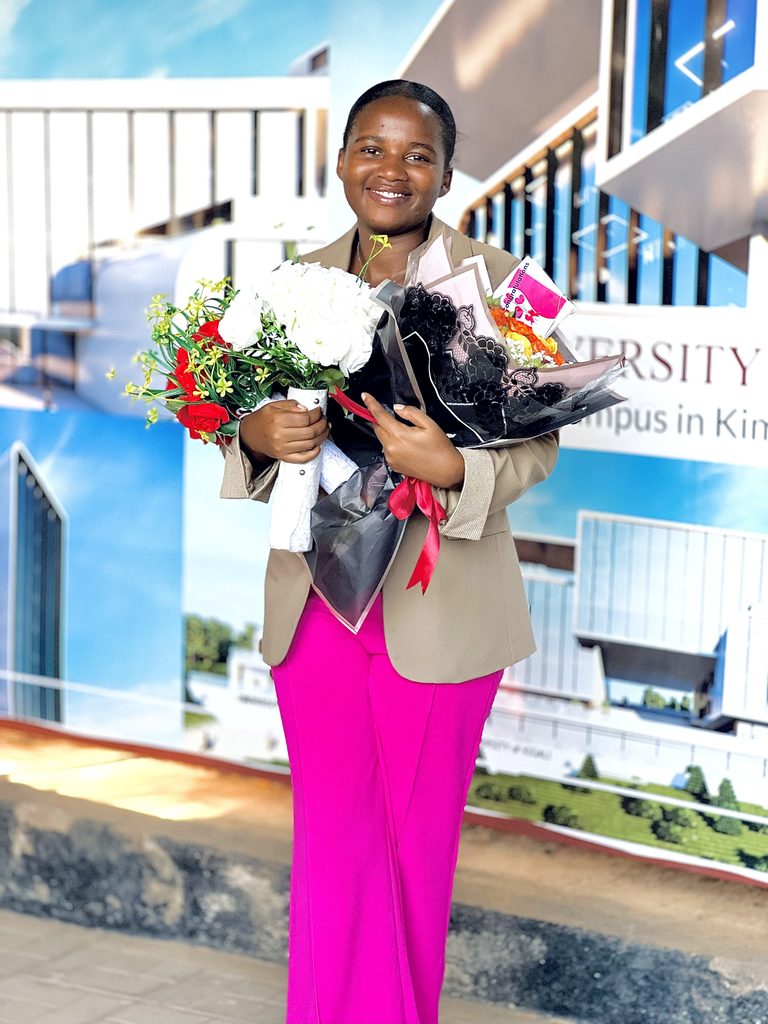
I worked very hard at university. It was too expensive to get an interpreter to come in and interpret the classes, so I just had to do my best with reading and writing and learn as much as I could.
What support did you get from DMI in your tertiary studies?
It is wonderful to be employed by DMI because, with the salary I earn here, I could afford to go to university. It was a private university and very expensive. So DMI’s support made all the difference.
What did you major in at university?
I got a bachelor’s degree in finance.

Great. We need you to keep an eye on Patrick with all that money he’s handling!
Haha.
Could you tell me about your faith? When did you come to know Jesus and put your trust in him?
I learned a little bit about Christianity in elementary school, but I couldn’t really understand much of it then. It wasn’t until I came to Kigali during COVID and began to attend the ICD (Immanuel Church of the Deaf*) church – and that was actually my very first time attending a Deaf church! Claire was my pastor, and I learned so much from her. I enjoyed the worship so much. I could understand the Bible, and I loved the fellowship that we had amongst the other Deaf believers. So the ICD church was really a big part of my spiritual journey.
* ICD: DMI has planted or incorporated 180 churches for the Deaf around the world. These churches operate under the name ‘Immanuel Church of the Deaf’, usually with the location name following (for example, ICD-Nairobi).
What do you think is the most important thing when reaching out to Deaf people with the gospel?
Again, communication is key. It’s really important to reach people in their first language. For many Deaf people, their first language is sign language, so they’re very receptive to that, and when I share the gospel, I’m able to do it primarily through sign. That’s something that Deaf people really respond to.
What do you know about DMI?
DMI is an international organisation that helps the Deaf to find Christ. It works through pastors and evangelists by training them to reach the Deaf for Christ.
I want to ask you something else. Some people are critical of organisations like DMI as being the ‘white saviour’ trying to come in and help but, in the end, only creating a kind of dependency. Do you see that? How can DMI better help Deaf people to be more independent?
No, I don’t see any problem at all with DMI. I think DMI’s support is very welcome and helpful. On a spiritual level, DMI trains local Deaf people to take the gospel to local people, and that’s a really wonderful thing. On a vocational level, there are no handouts. DMI provides loans which enable the Deaf to start their own businesses and become self-sustaining. This is very important and good for us, so we’re really grateful for that support.
What are your plans for the future?
I want to continue working in the Deaf community and encouraging the Deaf to come to Christ and to live Christian lives. I want to keep working with DMI in finance, too. I hope to study to become a CPA, and that will help me and DMI in the future, I think, so I’m looking forward to doing that.
That would be very challenging, studying to be a CPA, but I have no doubt that you will succeed!
With God all things are possible!
And finally, Ruth, what message would you like to share with other young Deaf people who might be facing challenges in their lives?
I want to encourage young Deaf people in Rwanda to prioritise education. Even though it’s challenging financially and in terms of communication, I want to encourage them not to give up and to do their very best to get a good education because that will really help them to get a better life.
And what message would you like to give to DMI supporters in other countries?
I want to encourage DMI supporters to continue with their wonderful support. It’s really important, and it makes such a difference to the lives of the Deaf. The donations we receive are well used and encourage sustainability through education and through employment projects. We’re really grateful for that, and we’d like to encourage people to continue with their support.
I’ve been asking you some curly questions. Do you have any questions for me?
Not a question, but I just want to say that I really appreciate what DMI is doing, and I want to thank you for that.
~
If you would like to support DMI’s work in Rwanda or any other country, click here or on the donate button below.
Ruth`s story is most inspiring! I hope she achieves all her hopes and will inspire others with her s tory.