
Andrew Miller is the International Director for DMI. When he’s not eating milk chocolate Lindt ball truffles in Sydney, he’s travelling around the world raising funds and DMI’s profile in developed countries or visiting the fields we support to see what’s needed and how our funds are being managed. Either way, he works tirelessly to avoid unidentifiable food and meets lots of weird and wonderful people who he just can’t resist interviewing…
#22 Gunnar
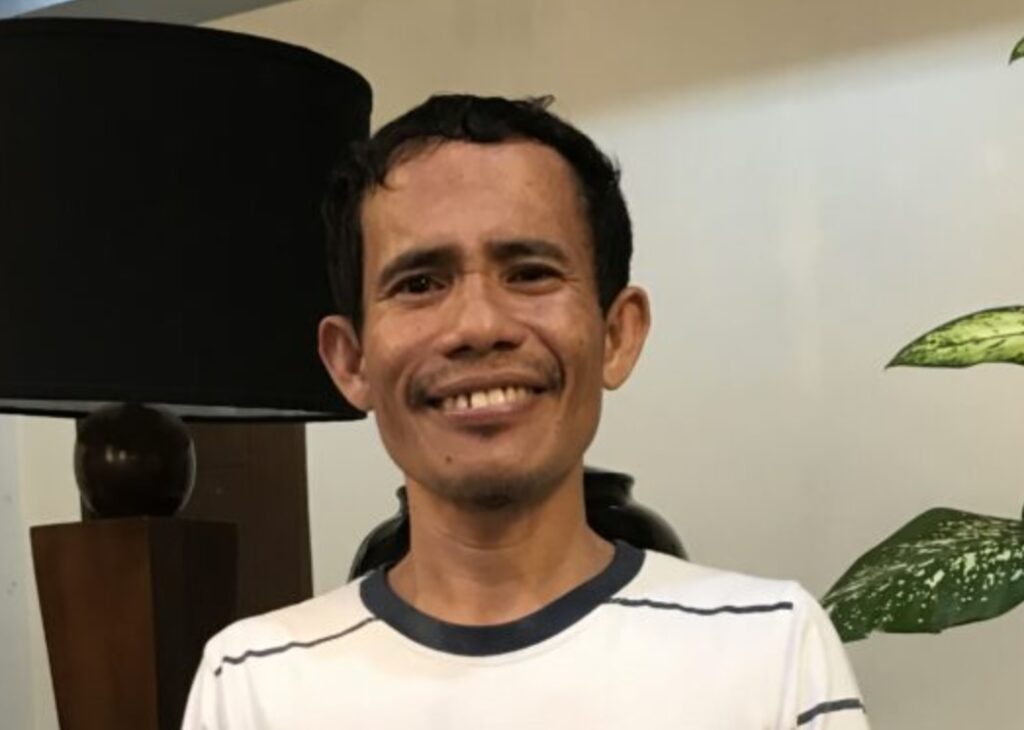
Gunnar Dehli is DMI’s most Senior Advisor. A long term leader, member of our Norwegian Board, and spiritual father to many in the field, Gunnar is a greatly loved and respected figure, wise beyond even his great years and deeply compassionate. He remains at the same time, humble, adventurous and unapologetically mischievous. I catch up with him at our International Conference in Cebu, Philippines.
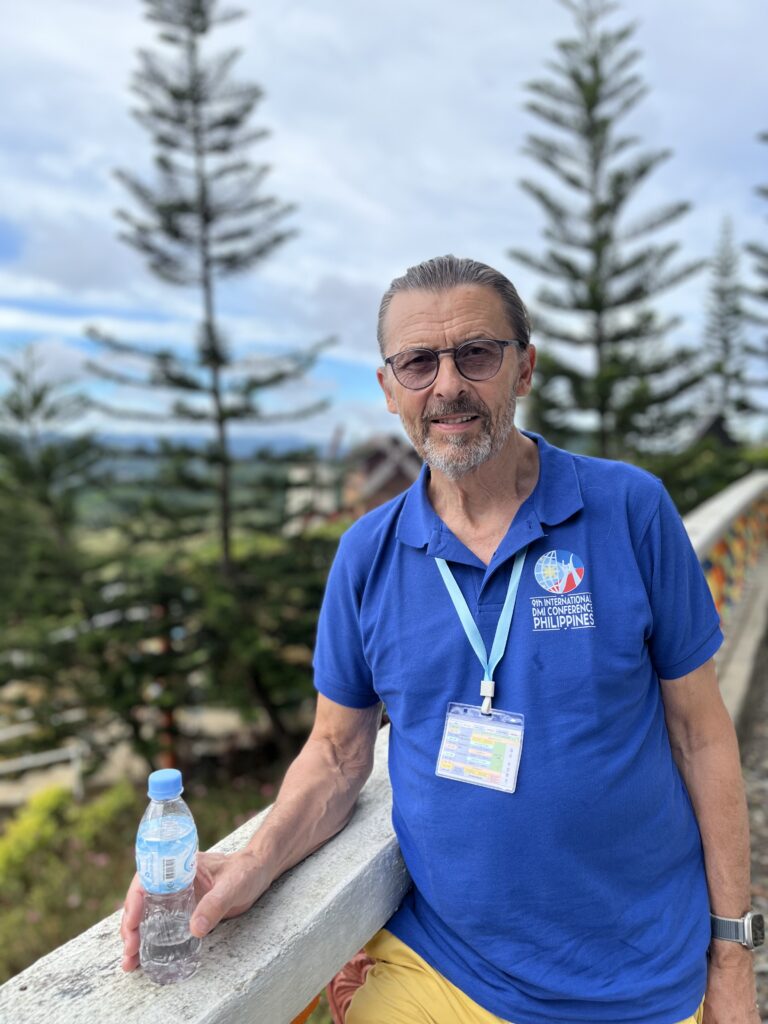
I’m sitting in the back of a vehicle with a man wearing no shoes and who has his legs stretched out into the front cabin under the nose of one of the passengers. He’s given some lame excuse about a sore knee, but it’s well known he likes people to admire his toes.
How are you finding the conference so far?
First, I want you to record my laughter for your introduction. I wish this could be a voice recording. It’s always good to come to these conferences and see all the different friends and workers in DMI.
How many DMI international conferences have you been to now? Which number is this one?
Actually, I don’t remember exactly how many. The first one was in Australia. I think it was in 2012 and then it has been every three years since then.
And what would you say has been the highlight of this conference so far?
Of course, it’s always good to hear about how the work has developed in the different countries, but I must say that I really love to hear from In Heo Kim and from Matthijs Terpstra when they share from the Word of God.
Talking about the developments in the fields, you must feel very satisfied, knowing that you’ve been so highly involved either through active fundraising or prayer or simply giving advice for these developments. When you see them, how do you feel?
Well, I don’t know if I feel proud, but I am very pleased to see how how the kingdom of God is growing among the Deaf in different nations. I’m so grateful to our Father for calling me into this so that I could work for many years together with Neville and then continue after he passed away, together with my other wonderful colleagues in this ministry.
I didn’t use the word ‘proud’ by the way, I used the word ‘satisfied’ but you read my mind very well. There have also been some serious issues to overcome in some fields. How do you deal with these issues without losing heart?
One important aspect is to understand that when you deal with people, there will always be some challenges and even disappointments. Mission work will never be smooth. However, in the big picture, we are seeing that the Kingdom of God is growing. Besides, it is His ministry, not ours. He is inviting us to take part.
What is your approach to disciplining or ‘pruning’ wayward behaviours or people in the light of a gospel of grace, particularly in regards to those who are disadvantaged and/or disabled?
When people do wrong, we need to relate to it as wrongdoing, not to excuse it or say that it doesn’t matter. This is about helping people to be responsible, and it is about their dignity. However, for me, it is so important to tell people that God the Father loves them and that their wrongdoings don’t change that, and that I continue to love them. People’s actions sometimes bear consequences, which is unavoidable, but I don’t believe in punishment as a way of ‘pruning’ people.

How did you come into the Deaf community in the first place?
I have a Deaf son. He is my second born. I have three sons and I didn’t know anything about deafness before I had this Deaf little baby in my arms.
How important is it for parents to learn to sign to communicate with their children?
It’s absolutely crucial. When we meet other families with Deaf children we often see that the mothers have developed signing skills but the fathers never learned to communicate in this way. So we saw that as the Deaf children grew up, they actually lost their relationship with their fathers. I was determined that this would not happen in our family.
Very good. So everyone in your family signs?
Yes, all of us. All our children sign and some of our relatives and one of my sisters actually became a sign language interpreter.
So, in a little bit more detail, what does your family dynamic look like now linguistically?
Linguistically we are we are a bilingual family. We all speak Norwegian and we all sign using Norwegian sign language. My Deaf son is married to a Deaf woman, but she now has a cochlear implant so she’s learning to understand different sounds around her and for her that is an exciting experience.
When did you first meet Neville and when and how did you come into the DMI community?
I was the Principal of a school for the Deaf in Norway and one of my Deaf staff introduced me to Neville so I knew him for several years before I joined DMI. I even visited him once at that time as our work paths crossed in the Philippines.
And what was your impression of Neville when you met him?
Oh, he seemed to be such a nice man – smiling, relaxed, and so humble. I was really amazed that the man who started such a large mission ministry could have that kind of humility.
And so it’s been downhill from there with every other Australian you’ve met…
You get the hint.
Ha! How did God call you to join Neville in this ministry?
I had been heading a large Deaf Christian based organisation in Norway called ‘Signo’ for many years. After I left that position, I one day was reading in the newsletter from DMI Norway that they were looking for a secretary. It listed a lot of work tasks – stuff that I hated to do – but I could not get any peace in my heart by ignoring it! So I contacted the board and from there God has led me into this work.
Neville had a reputation for ‘tapping’ people for ministry in a way that they found difficult to refuse. Is that how it was for you or was it more of a God thing?
It was a good combination. I felt this was really a calling from God – it really stirred my heart – and after contacting Neville he immediately invited me to go on a six week tour to the Middle East and Africa with him and that confirmed the calling for me.
Things have changed quite a lot since Neville passed away. How do you see the current DMI structure and how do you feel DMI is developing?
I must I’m say I’m quite happy about the way we are moving together. I believe we are becoming more of a good network of people from different nations standing together in this work. I’m very happy to see such growth after Neville passed away.
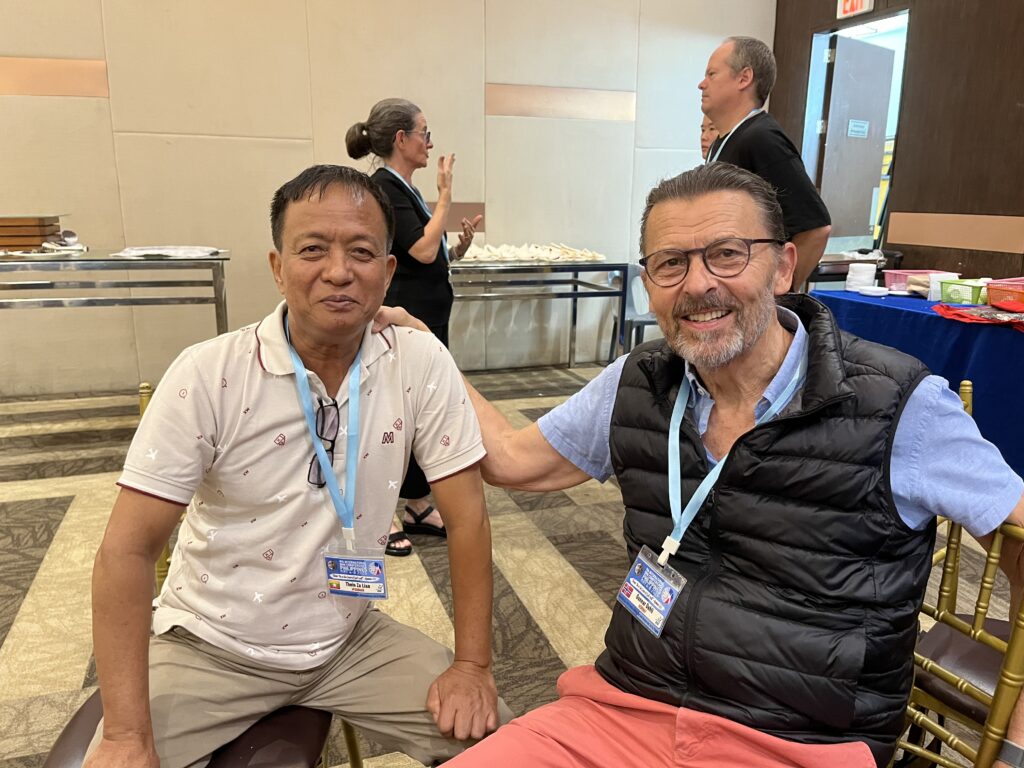
In all your years in working with DMI, can you identify one single development that you think is particularly outstanding?
Well, to speak from a personal angle, it would be sharing the gospel of the Father’s love to the Deaf through the Fatherheart schools we have been running. To me, it has been wonderful to see how profoundly this has impacted so many Deaf people.
Can you tell me a little bit about the Fatherheart program and why it’s so effective with the Deaf?
There is a focus on forgiveness in this program that has a very deep impact, leading to freedom. Many Deaf have experienced a lot of oppression in their lives and as a result have tried to protect themselves by closing their hearts. By learning how to open their hearts to the Father’s love and receiving a revelation and connection to God as their Father, it brings the most beautiful freedom to their lives.
Is there one particular relationship or testimony that strikes you as best exemplifying the work of DMI?
I have been working closely with Josephat from Kenya for many years. When I first met him he was a big shot. He was a bishop in Kenya and everyone admired him. He had power. To see him humble himself, and learn to see himself as a child of God – a little boy working together with his Father – that change really impacted me. I want to lift his example up.
Very good. It’s open mic time. Is there anything you would like to say to DMI readers and supporters about the work we do?
I would like to say that I’m very happy about the order and structure that I feel has been established in this work lately. I would say after you, Andrew, came into your position, the way you’re leading the work now, it creates peace and confidence among us. I must add, I’m quite impressed with how you have come into the Deaf world and learnt to communicate with the Deaf so I feel that we are working very well together across the countries because of your leadership. – Don’t edit or cut that bit out. I want it written just as I said it.
I thought you were going to say ‘Oh, another bloody Australian’! But I’m flattered and I must agree with you in that the working relationship that I and the other Australian staff have had with the Norwegian staff and other international staff has been very encouraging.
On a final note, does it worry you at all that we riding in a van in which the driver is using a Japanese katana sword for a gear stick?
I’m always very relaxed when I travel. I love to drive myself too, and I love speed. This driver is actually quite a speed nut. I like it.
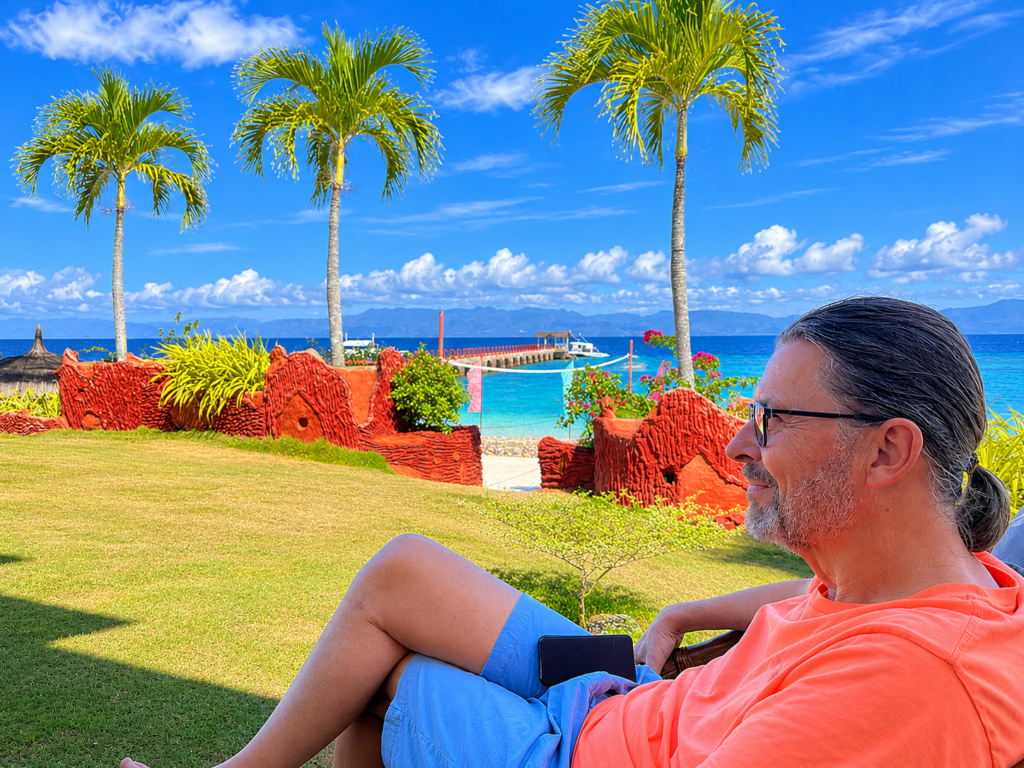
~
If you would like to support our work please click on the button below, go to https://deafmin.org/donate/ or mail me here for more information.
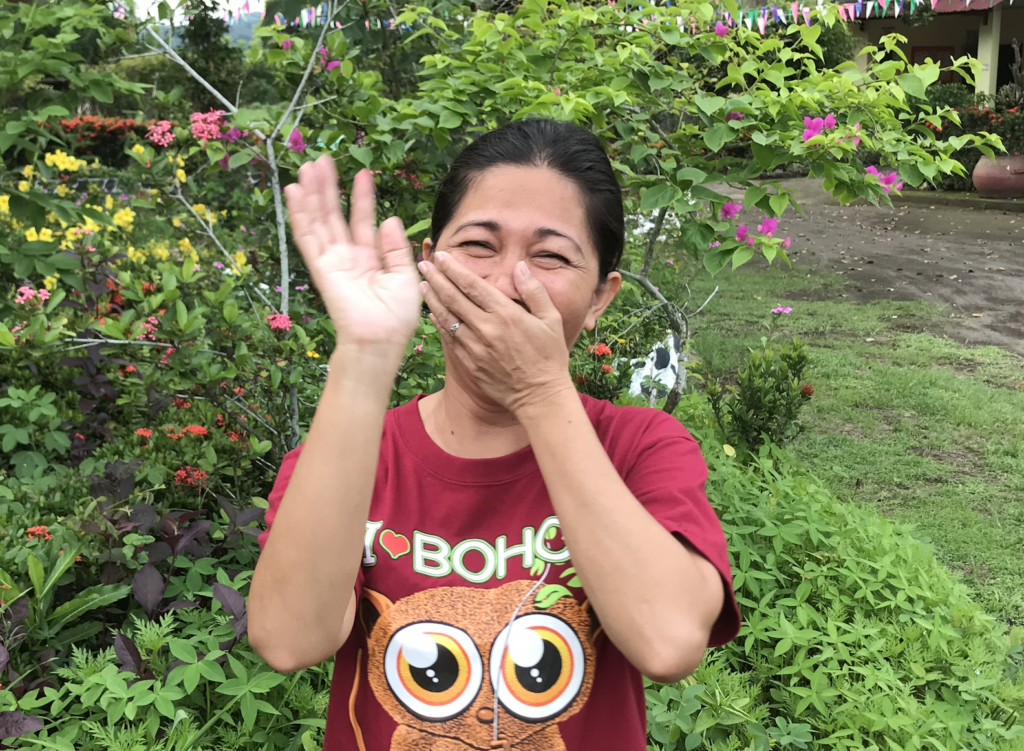
What a great chat!